Horse record
Name, microchip number, date of birth, breeding, height and notes. For a young horse this is the start of the record it carries for life.
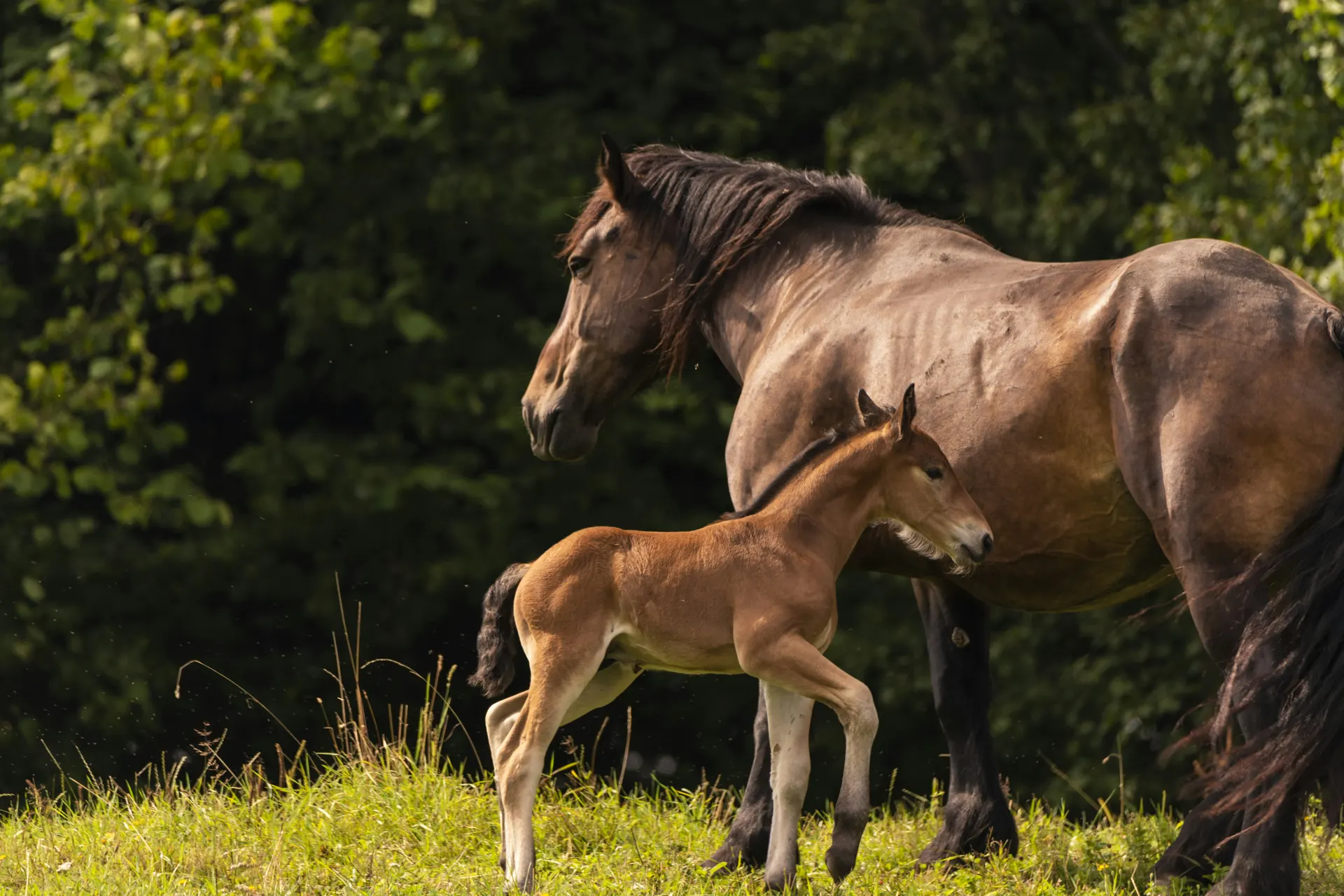
On a youngstock farm the horses live in groups in fields or barns, not each in its own stable. The daily work is checking, feeding and moving; the administration sits in the exceptions: a horse that is lame, a worming that is due, an owner who comes to look. Those exceptions have to be findable, months later, per horse.
The rearing period usually runs from weaning until the horse is three or four. In that time the horse changes field group, has several vaccination rounds and wormings, sees the farrier every six to eight weeks, and the costs shift with age and season. Anything you do not write down about that is lost by the time the horse leaves.
Breeders and youngstock farms almost always work for owners at a distance. The breeder or owner wants to know how the horse is doing, when the vet came and what this month's invoice contains. Without an app that goes through photos on WhatsApp and a phone call; with a shared record the owner sees it themselves, as it happens.
Stud farm management software is therefore a horse record with a diary and an owner attached. The field group, the health records, the recurring care and the monthly invoice all hang off the same horse, and the owner reads along. Keep that up from weaning and you hand over a horse with a complete history at the end.
Six things that come back at every stud and rearing farm.
Name, microchip number, date of birth, breeding, height and notes. For a young horse this is the start of the record it carries for life.
Which horses are together in which field or barn, and from when. A move to another group is recorded, so you know later who the horse ran with.
Per horse, with date and product. Young horses get several rounds; a missed one only shows up when the record is asked for.
Recurring visits as tasks in the diary, ticked off when done, with a photo where useful. The owner gets a notification at a new record.
Who is the owner or breeder, who decides when the vet is called, who receives the invoice. The owner reads the record of their own horse in the app, free of charge.
Rearing fee per month, plus extras such as a treatment or additional feed. Invoiced per owner every month, with the farm's VAT treatment.
In this order you have a working record per horse after one afternoon of data entry.
Name, date of birth, microchip number, breeding and the owner. In EquiManage the owner can be a manual member without an account; if they get an account later, the two are merged and they see their horse in the app.
Every field or barn as a place with its type and monthly price. Per horse you choose each month where it lives. That gives one overview of which group is where and what each place earns.
Worming per period, farrier every six to eight weeks, vaccinations on your vet's schedule. Recurring tasks are set once; every evening at 6 pm the app reminds whoever looks after the horse what is on tomorrow.
Vaccination, worming, injury, vet visit: each with date, note and optionally a photo. A new record can send the owner a notification straight away, so they do not have to phone.
The rearing fee hangs off the place, the extras off the horse. The monthly invoice builds itself; you check, add exceptions and send all invoices in one go. Your accountant receives an export.
Everything ticked means you can hand over a complete record when the horse leaves.
By recording every field or barn as a place and choosing per horse per month where it lives. A change halfway through the month you note on the horse; next month it starts on the new place. That keeps visible which group the horse has run with.
Yes. An owner with an account sees in the app the record, diary, health records and invoices of their own horse, and only that horse. At a new health record they can receive a notification. That replaces the photos and phone calls breeders send today.
Put the round as a recurring task in the horse diary of every horse in the group. The app reminds you the evening before, and afterwards you log a health record per horse with date and product. That gives you the evidence per horse later, even if the group has changed since.
You set the horse to inactive. The record with all its entries is kept and can be consulted if questions come up later about vaccinations or treatments during rearing.
You can keep the height and notes per horse and document development with photos. EquiManage does not have a separate growth curve with weight measurements; farms that want one note measurements in the notes or as a health record.
Enter your young horses, link their owners and put the fixed care in the diary. EquiManage is free to start.
Get started for free
Yard management4 min read
How to organise a competition yard: a training plan per horse, arena booking, riders and owners, and monthly invoicing of livery and training. With a checklist and competition yard software.
Read the article
Yard management4 min read
How to run a livery yard: set livery packages and prices, fill stables and fields, keep owners informed and invoice every month automatically. With a checklist and livery yard software.
Read the article
Yard management2 min read
Stable management is the whole of the daily tasks around horses, people and administration on an equestrian business. What it involves, which tasks belong to it and how software helps.
Read the article