Training diary per horse
Which horse is ridden, lunged or walked when, and by whom. Recurring programmes go in as a template; exceptions are adjusted per day.
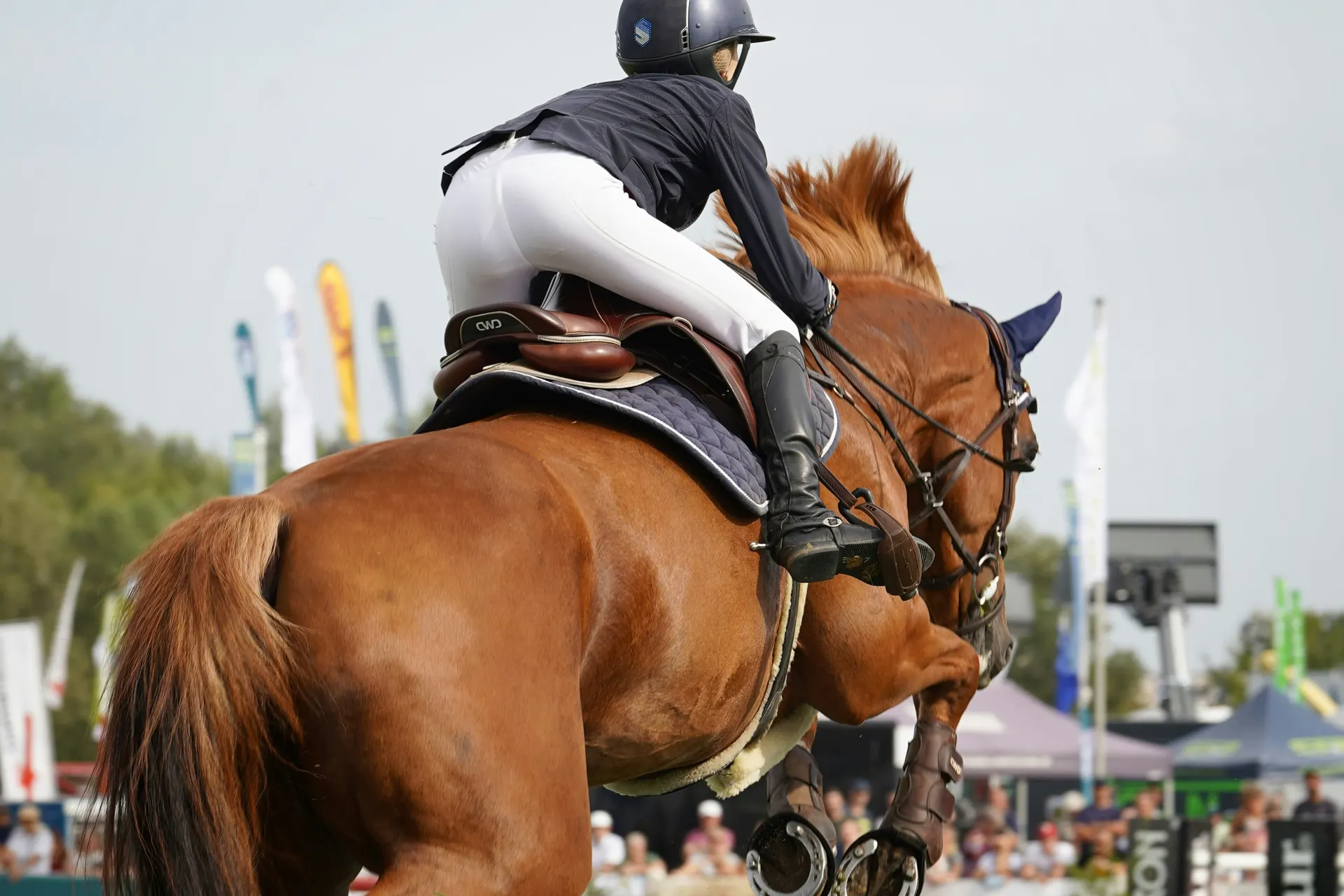
A competition, training or dealing yard has no timetable of group lessons, but a daily plan per horse. Each horse has its own programme: flatwork, jumping, lunging, the horse walker or a rest day. That programme is carried out by the yard's rider, a working pupil or the owner, and changes from week to week in the run-up to a show.
The administration lags behind. At the end of the month the invoice per owner has to include livery, the number of training sessions, show support and the extras. In practice that gets reconstructed from a diary, a whiteboard and a few WhatsApp messages, and that is exactly where the mistakes creep in.
A competition yard also shares its facilities with more people than a livery yard does. The indoor school, the outdoor arena and the horse walker are used by the yard's own riders, by owners who come to ride their horse and sometimes by visiting trainers. Without booking you get double bookings and arguments at the moment everyone wants to ride.
Competition yard software therefore has to connect three things: the diary per horse, the booking of arenas and facilities, and invoicing per owner. A training session planned once appears for the rider, occupies the arena and counts on the invoice. With that connection in place, nothing needs reconstructing at the end of the month.
Six things that come back at every sport or training yard.
Which horse is ridden, lunged or walked when, and by whom. Recurring programmes go in as a template; exceptions are adjusted per day.
Indoor school, outdoor arena, horse walker and lunge pen with a booking per time slot, so yard riders, owners and visiting trainers do not get in each other's way.
Who rides which horse, who owns it and who receives the invoice. Owners who are clients only and never ride belong on the list too.
Stable or field, size and monthly price. A horse that goes out to grass for a while or leaves for a show changes status without the invoice going wrong.
Vaccinations, farrier, dentist, physio and treatments per horse, with date and photo. For a sport horse this record is also the evidence at sale or for insurance.
Livery, training sessions, show support and extras per owner, every month, with the yard's VAT treatment. Sending several invoices in one go saves half a day.
Start with the diary, because that is where the daily work is; invoicing follows from it.
Each horse with its owner, its stable and the rider who usually trains it. This is the base list everything hangs off. Add the microchip number and vaccination dates straight away and the record is complete.
Flatwork on Monday and Thursday, jumping on Wednesday, lunging on Friday, rest on Sunday. In EquiManage you set such a programme once as the horse diary; the app generates the days and sends a reminder at 6 pm every evening to whoever looks after the horse.
Make the arenas bookable per time slot. Owners who come to ride their own horse book in the app; the yard riders see in the same calendar when which arena is free.
Livery as a fixed monthly price, training per session or as a package, extras as separate lines. Record that per horse and the monthly invoice builds itself; you only add the exceptions.
An owner who sees in the app when their horse was trained, what treatment the vet gave and what the invoice will be phones less and pays sooner. They see their own horse only.
Tick off what is done; everything ticked means the monthly invoice follows from the diary.
Yes. In EquiManage the horse diary is separate from lessons: you plan recurring tasks per horse such as training, lunging or turnout, and the app reminds whoever looks after the horse. You only use a lesson timetable if you also teach riders.
By setting up the arenas as bookable facilities with time slots. Everyone allowed to ride books in the same calendar, and a taken slot cannot be booked twice. You decide who may book and how far ahead.
Attach livery as a fixed monthly price to the stable and training as a line per horse, per session or as a package. The monthly invoice then contains both. Exceptions, such as a show weekend, you add as a separate line before sending the invoice.
Owners see their own horse only: record, diary, health records and invoices. What other horses on the yard are doing, they do not see. You choose per record whether the owner gets a notification.
Yes. A horse that is sold is set to inactive; its record stays as evidence of vaccinations and treatments. A new horse is entered with owner and stable and immediately runs along in the diary and the invoicing.
Enter your horses, set the weekly programme as a template and open your arenas for booking. EquiManage is free to start.
Get started for free
Yard management4 min read
How to organise a stud or youngstock farm: track young horses per field group, plan vaccinations and worming, keep owners informed and invoice per horse. With a checklist and stud farm software.
Read the article
Yard management4 min read
How to run a livery yard: set livery packages and prices, fill stables and fields, keep owners informed and invoice every month automatically. With a checklist and livery yard software.
Read the article
Yard management2 min read
Stable management is the whole of the daily tasks around horses, people and administration on an equestrian business. What it involves, which tasks belong to it and how software helps.
Read the article